Prisms, Cycles, Leaps
all three parts of the Prisms, Cycles, Leaps Suite.
*Note: The three parts do not need to be played sequentially.
Prisms, Cycles, Leaps 1
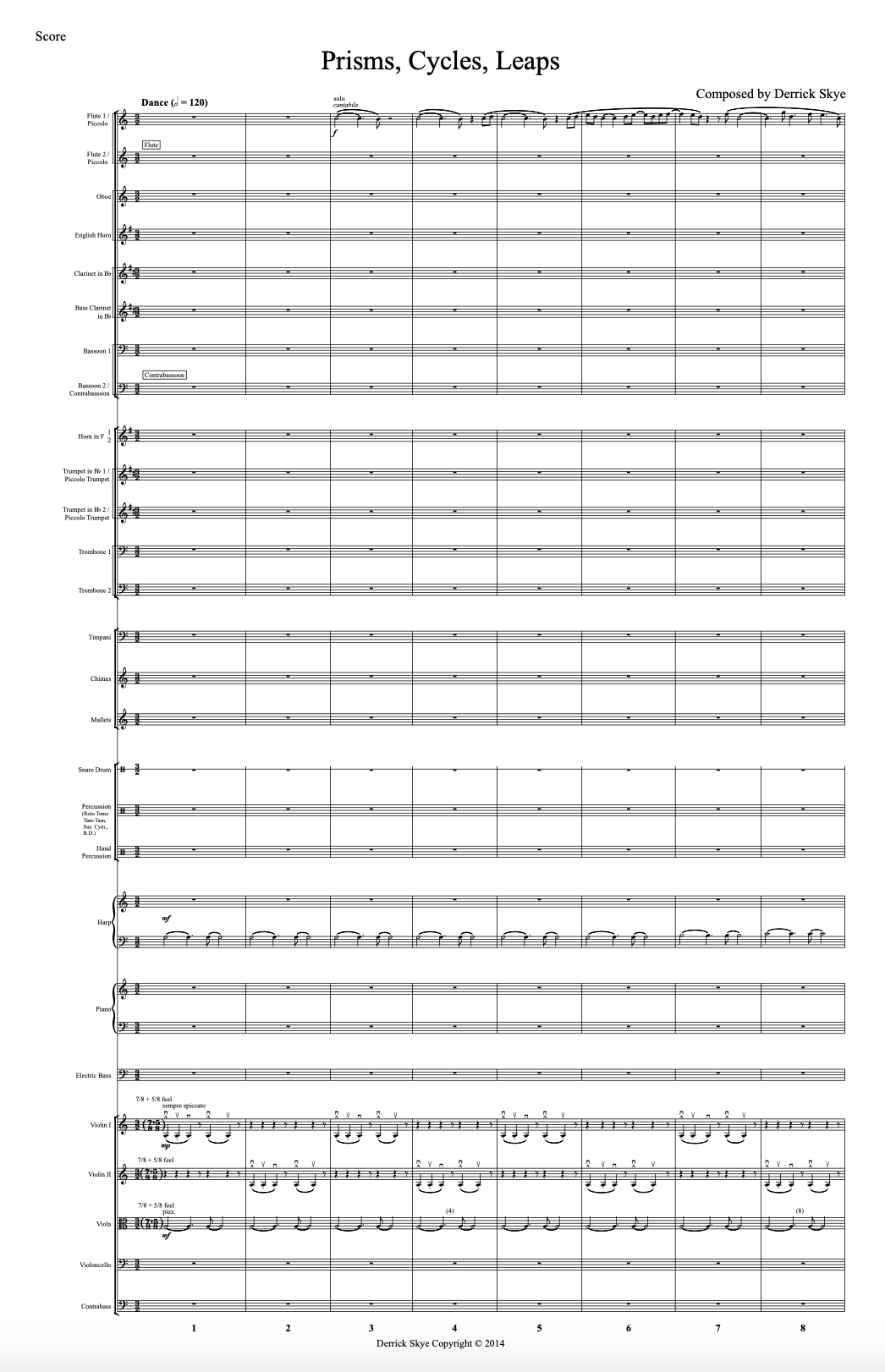
Prisms, Cycles, Leaps is Part 1 of the three-part Prisms, Cycles, Leaps Suite. Part 1 bridges the space between Western classical music, music of the Balkans, music of the Volta Region of Ghana, and North Indian Hindustani classical music. My work always seeks to build bridges between different communities through music.
The time signature of the piece is in a foundational 3/2, but shifts its emphasis to 6/4, 12/8, 7/8 + 5/8, and 5/8 + 7/8 in different sections by using different polyrhythmic ostinatos that are found in traditional Ghanaian drumming and dance, specifically from the Eʋe people of the Volta region in Ghana. These polyrhythmic ostinatos are inspired by the Eʋe pieces Atsia Agbekor, Adzro, and Adzogbo, when the gaŋkogui (bell), Atsimeʋu (lead drum), and axatse (shaker) rhythmic patterns combine. Hypermeters are also used to draw attention to larger cycles that occur in the piece.
The melodic lines of Prisms, Cycles, Leaps combine elements of Balkan music and Hindustani classical music. While the melodic lines often use an ornamentation specific to Bulgarian women’s choir music (similar to accaciaturas and mordents found in Baroque music), the larger form of melodic lines at times use a tihai rhythmic cadence and the long phrases found in improvised Hindustani classical music. Tihai is a thrice-repeated rhythmic phrase in an overlapping meter, where the last note of the third repeat resolves to beat one of the cycle. Tihais are often used to end a section or conclude a piece in Hindustani classical music. The open harmonies found in the music of Aaron Copland and Appalachian folk music also inspired much of the harmonic movement in Prisms, Cycles, Leaps. The title Prisms, Cycles, Leaps refers to a search for beauty in life and nature through multiple and varied yet cyclical experiences.
Prisms, Cycles, Leaps 2: From Here A Path
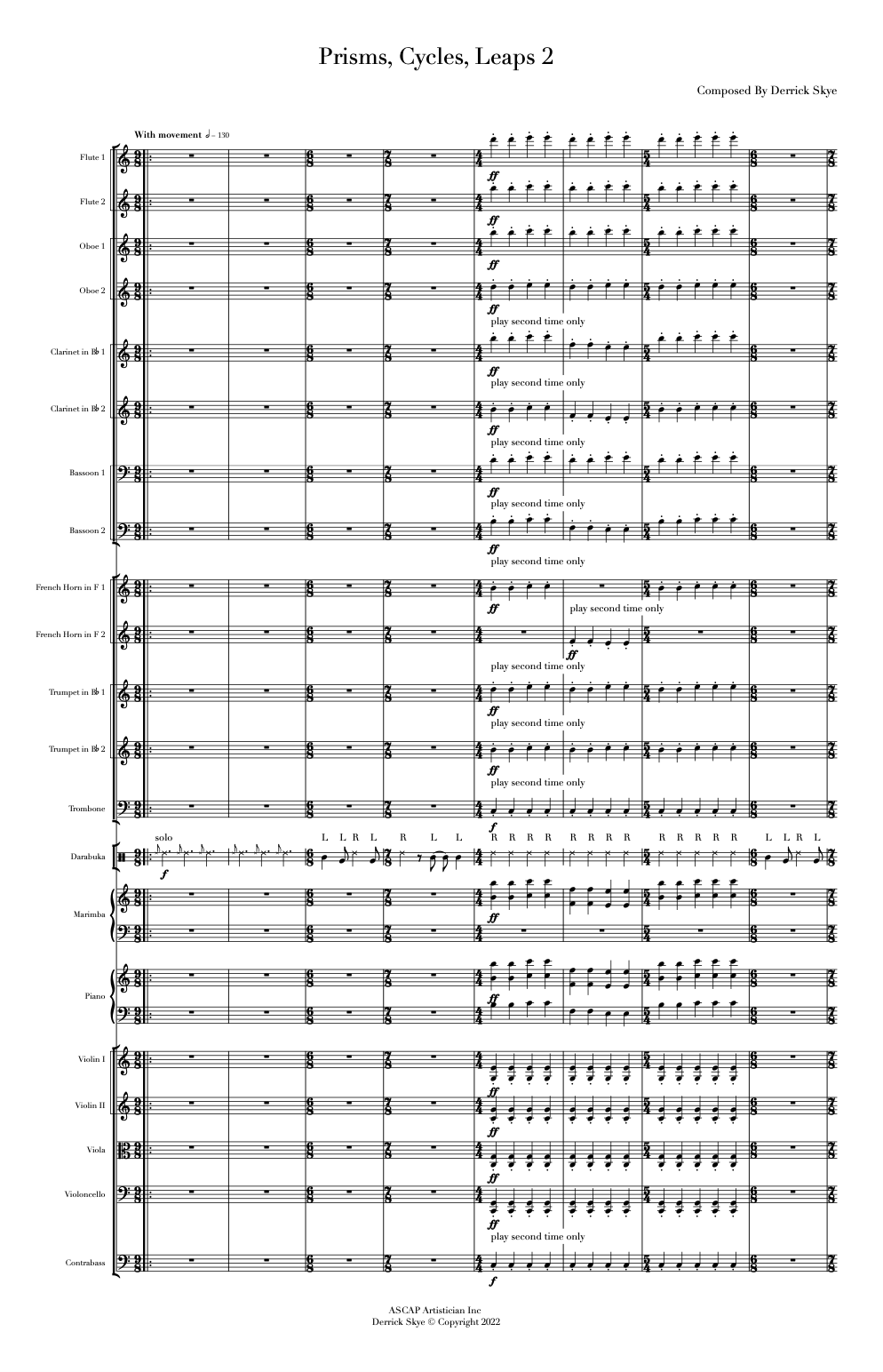
From Here A Path draws inspiration from Husago (a piece that includes drumming, dancing, and singing) from the Eʋe people of Ghana, kaval flute playing from Eastern Europe, Dastgah Mahur and Dastgah Nava from Persian Classical music, Indian classical tala. The piece shifts its emphasis from 6/4 to 12/8 and 4/2 and also uses different combinations of 5/8 and 7/8. The tihai (a thrice-repeated rhythmic phrase in an overlapping meter that is used to end a section or conclude a piece in Hindustani classical music) is also included multiple times in the piece. The title From Here A Path references the momentum and resistance one gathers to reach a point.
Prisms, Cycles, Leaps 3
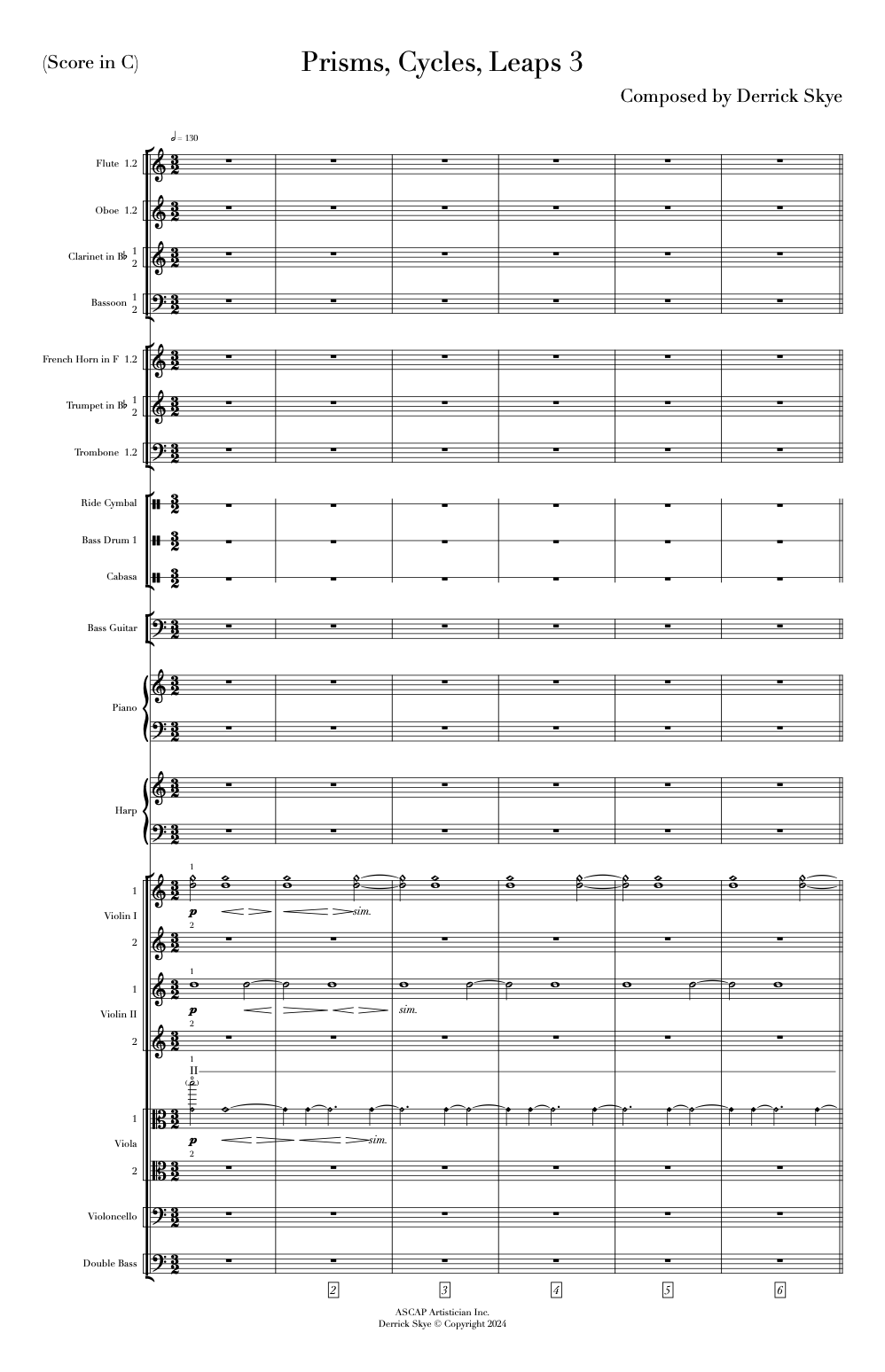
As in the previous two parts of the three part Prisms, Cycles, Leaps suite, Prisms, Cycles, Leaps 3 continues to integrate musical practices from numerous cultures into a Western classical setting. My music always seeks to build bridges between different communities, through sound. The piece includes rhythmic elements from Ghanaian drumming; Persian classical music; and Indian classical tala; as well as melodic elements found in West and North Africa, Persian classical music, Bulgarian folk music, and blues, gospel, and bluegrass music of the United States. The driving, asymmetrical rhythms and lyrical solos from Stravinsky’s Rite of Spring and the work of Giacinto Scelsi (who is best known for writing music based around one pitch, altered through microtonal oscillations, harmonic allusion, and changes in timbre and dynamics) are also influences in the piece. My hope is that Part 3 will resonate personally with listeners in nuanced ways, both familiar and unfamiliar. The title of the suite, Prisms, Cycles, Leaps, is a reference to a search for beauty in life and nature through multiple and varied yet cyclical experiences. Part 3 expresses the impossibility of reaching an end point, as the experience of finding more ways to communicate and connect with one another is endless.